Sit on your eggs

Eggs-in-a-nest

Many people don’t believe their thoughts have any value. When these people have an inkling, an idea, or some other great mental event, they shrug it off and forget about it. Thoughts, for me, are like eggs. Many times, I don’t know where they come from, but suddenly they’re there, and I find myself sitting on them. I figure my job is to make sure those eggs hatch. I’m not responsible for how they got to me, but I am responsible for them once they get here.

Now, many of the ideas I get aren’t that good. If I could show you my hard drive, you’d see how many ideas I’ve hatched that are absolutely terrible. And quite a few more that are mediocre. But, in there are the ideas I absolutely adore, and some I believe to be valuable, though I’m not that attached to them. So, if they don’t die when I hatch them on my hard drive, I follow them through until they’re full grown, and then I have to find a home for them. It’s my job. They’re my eggs.

Some ideas aren’t stories. Some are woodworking ideas, ideas for supper, ways to fix things, conversations I need have with people. Questions.  Lots of ideas are pieces of bigger ideas. So I collect them. Categorize them. File them where they belong. Sit on them.

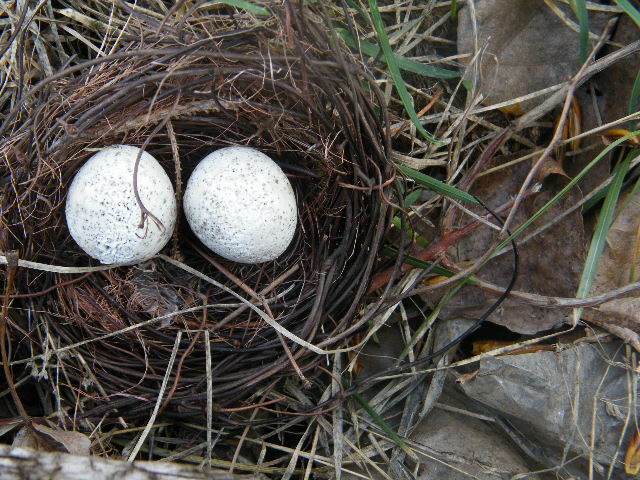
Happily, Duck Boy found a home (Yeah, Bitingduck!). And now I enter the final phase of helping give birth to an idea and guiding it through to its “adulthood.” Anyhow, the picture I’ve included here today is one from my back yard. It’s an abandoned nest. The eggs arrived, but for some reason the mom has left the nest, never to return. This, for me, is a picture of how some folks treat their ideas, abandoning them before they’re born. So this is my advice: take care of your eggs. If you don’t no one else will.
Posted in advice, Essays, fiction, non-fiction, Writing advice, Writing process, Young Adult | Tagged , , , , , , , , , , | Leave a comment

Don’t be perfect: the janitor approach

fingers on keyboard

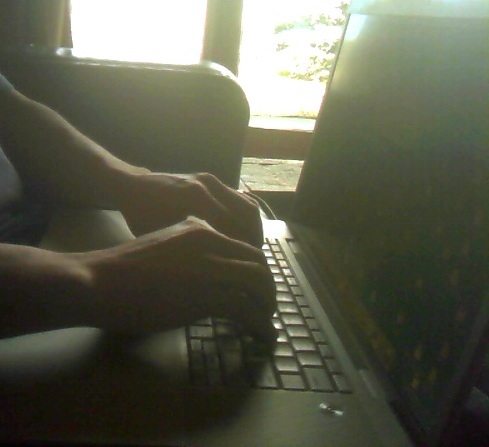
Today’s note is about one of the big barriers that keeps people from writing: perfection. Many folks believe that writing has to be right when it gets typed in, or at least they act that way. I don’t know if you’ve ever found yourself writing a sentence, and then backspacing over the sentence because it’s not good enough, doesn’t sound right, or seems otherwise defective. If I believe I must write perfect words and perfect sentences, I’ll struggle to get a single word out, which makes a 50,000 word project a bit daunting.

My advice is that you write it down and don’t worry about it. You can always fix it, right? An ugly sentence can always be revised, a bad plot idea improved, a dull character sharpened. If I approach writing this way, I’m more likely to be able to get words on the page, which is the very first step in writing a novel. Get words on your page. Get lots of them there.

A fairly large portion of the writing process is about fixing ugly writing, so we don’t have to get it right the first time. I’m a janitor. I make a mess and then clean it up. But if I don’t make a mess first, I’ve got nothing to do. Be a janitor. That’s what the writing process is all about.  Making the words better, the plot stronger, the characters well developed is for another day. This is about getting the gist of the story down.

Posted in advice, Essays, fiction, non-fiction, Writing advice, Writing process, Young Adult | Tagged , , , , , , , , , , , | Leave a comment

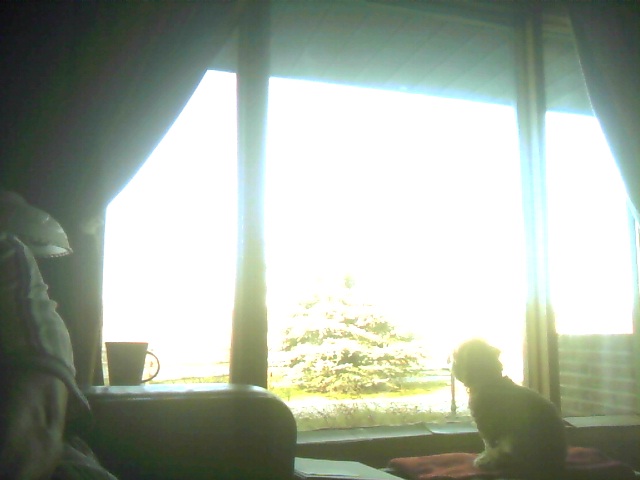
dog and cup

You still are the biggest tool around, when it comes to the writing process. As I’ve been suggesting, one of the most critical pieces of writing successfully is figuring out how you like to write. I can’t really tell you how that’s going to look for you, because I’ve only bothered to figure it out for myself. I know a lot of how it works for me.

As I sit in my favorite spot on the couch, looking out at the mountains, which are very clear today by the way, a dog beside me, a coffee cup within reach, I’ve created a situation that leads to decent writing by my standards.

  • How do you like to write? This, I’ve covered already. One minor addition. Different approaches lead to different results. If a person writes long hand, then types the scribbles into a computer, it’s going to produce something slightly different than if a person simply types into a computer the first time. There will be differences in the quality of the writing. Remember, too, that the writing process that is most convenient, might not be the best one. As with all things, experiment to find what works best.
  • Why do you like to write? Lots of people like to write for particular reasons. One of the most popular moods that motivates writing, for example, is anger. Anger is very common in writing and music. It’s not the only motivator. Another is infatuation. I notice that I have “moods” that typically encourage me to write. I also know a little bit about how to handle those moods, or my writing will go flat. Sometimes, if I talk about how I’m feeling before I write, I lose the energy I had to write, for example. So, I’ve learned, in some situations, to write first, and then discuss things.

Remember, figuring out how you like to write is important so you learn how to better deploy yourself as a writer and get the best results you can. Some folks like to sort out what kind of writer they are before they begin a writing project, or if you’re like me, you’d probably start and figure it out as you go along.

Posted on by Bill Bunn | Leave a comment

You’re the biggest tool (in the writing process): Part one

tool

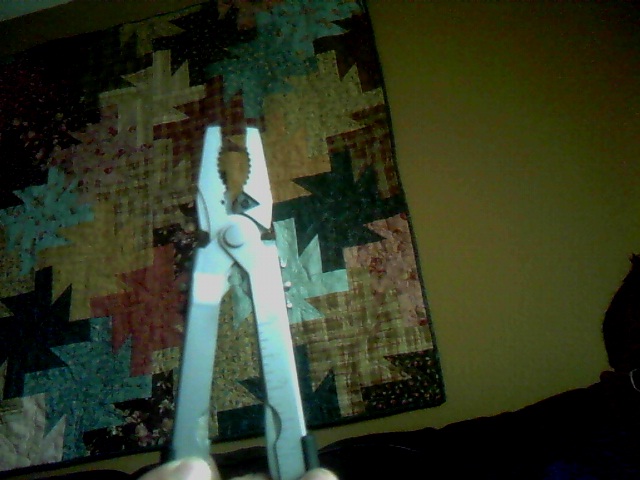
Lots of folks think that the most important thing about writing is having a laptop or a pen, or something. But the biggest part of the writing process is what you bring — you are the biggest tool! So, you should understand how you like to work. Otherwise, if you’re a screw driver, you might end up using yourself like a hammer. Which is frustrating. If you don’t understand how you like to work, you might be tempted to believe you can’t write. So, pay attention. Figure out what kind of tool you are. Here are some questions that might help you figure it out:

  • When do you write best? Some people are morning people. I’m not. I like writing in the late afternoon. Actually, if I had my druthers, I’d write after 10 p.m..
  • Where do you like to write? Some people like to write in restaurants. Some like to write in a super quiet place. Some like to write at home. Some like a window next to them with a gorgeous view of the mountains right in front of them (Oh wait, that’s me.). I have a favorite spot on the couch that I’ve nearly worn out from sitting there.
  • What do you like to write with? Old-school: Pen and paper. Typewriter (some people actually do like typewriters still). Computer. I have a great computer I write with. It has keys that glow in the dark. Since I like to write at night, sometimes, the glowing keys mean I can turn the lights out in the room and type, which I enjoy. I have an awesome pen, too. If I go old school — pen and paper — a good pen is essential. Don’t skimp, eh. I also need cappuccino, or French press coffee, tea — some kind of warm beverage beside me. And chocolate never hurts, does it?
Posted in Essays, fiction, non-fiction, Writing process, Young Adult | Tagged , , , , , , , , , , | Leave a comment

I make a mess when I write. How about you?

There are many ways to write a book. When I first had the idea to write a novel, I spent a little time researching how to write a novel. Lots of people have lots of ideas. A number of people recommend that you spend time “plotting” out the novel, meaning that you write down each event in a word or short sentence, then organize the events into the most effective order you possibly can. Sometimes, writers use cue cards, so they can shuffle the order of events easily. It’s an efficient and effective way to write, I’m told.

I tried this approach, and hated it. I didn’t want to know what was going to happen. It sort of ruined the surprise for me. So I couldn’t use the cue cards or plot-outline type methods. Like my office, I just had to make a big mess and then fix it. So I wrote the story as I thought it would happen. I had to rewrite just about everything at least once. After I wrote it, I would realize that one of the characters wasn’t acting like he or she should, or perhaps I thought of a better event that should happen instead. I moved stuff. I cut stuff. So it wasn’t very efficient, but it worked for me. In fact, that’s my writing style, it turns out. And there are many writers who write in a similar way as I do. After a fairly long time, I had a complete first draft, but there were many, many little problems. I didn’t panic. I knew I could fix it.

Writing style is absolutely individual. Everyone’s different, and so when it comes to writing a novel, you have to find what works for you. If you don’t, you won’t finish, I don’t think. A novel is a lot of words and a lot of work, so make sure you know how you work before you start.

Posted in advice, Essays, fiction, non-fiction, Writing advice, Writing process, Young Adult | Leave a comment

Keep your space messy!

messy

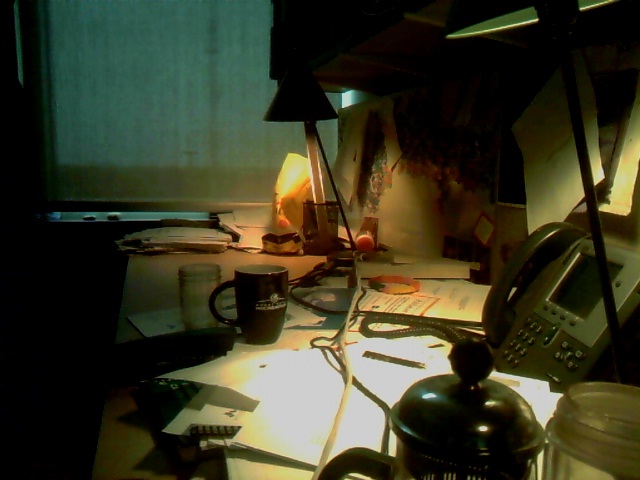
I’m a firm believer in keeping a messy work space, and collecting stuff. Anything that’s of any interest of all gets kept somewhere. So my desk is a jumble of memories, artwork, books, books, books, junk and notes I’ve jotted down. I try not to clean my office too often. The messiness itself becomes creative. Papers, photographs, and books that have never met before will tumble together at times and I am often there to witness their meeting. I think it was this kind of accident that led to me somehow associating the news story of a duck who became frozen in pond ice with some memories of junior high school, sitting in a class doing “remedial work” as they called it at our school, which was work given to people who were considered slow or uncooperative. In the middle of this connection, I stumbled on to an Alchemy website, run by a man named Adam McLean (http://www.levity.com/alchemy/). I was fascinated, and read quite a bit on how alchemy worked. I put these ideas into a blender (metaphorically speaking), ran it on high for 4 minutes, and presto, Duck Boy was born.

Posted in advice, Essays, fiction, non-fiction, Writing advice, Writing process, Young Adult | Tagged , , , , , , , | Leave a comment

Duck Boy Alchemy

The impetus for Duck Boy started many years ago when I was in middle school. I found middle school years were the toughest I’d ever known. A lot of the difficulties I had during those years I carried around for a long time. Then, I discovered writing. Writing’s kind of like the story of the miller’s daughter in Rumplestiltskin. She was forced to spin gold from straw. Writing is like her spinning. With a little work, I can take bad experiences (straw) and spin them into stories (gold). Duck Boy, in this sense, is my attempt to spin gold from straw. Which is a kind of alchemy, and alchemy is critical to Duck Boy, too.

Over the next little while, I’m hoping to blog about the experience of writing the story, and how it finally became a book, including the wonderful process of working with Bitingduck Press. Where else would a story involving a mallard be published?

Posted in advice, Essays, fiction, non-fiction, Writing advice, Writing process, Young Adult | Tagged , , , , , , | 1 Comment