Smell the story

I’ve been working pretty hard on my latest project. Since January, I’ve logged 79,000 words on my latest YA novel. My goal was to have a complete first draft, ugly as a fairytale stepmother, done. Mission accomplished.

I’ve written and envisioned the whole story using Google maps and internet research. Which has been fun and good. But I’ve never been to the place.

So, I decided to visit. I’ve got lots of sensory detail missing from the story. The sounds and smells, the color of the earth, all that sort of thing isn’t in yet. Just basic plots and dialogue. I’ve mapped out how my character moves, and good estimates of how long it takes for him to walk here or drive there.

My wife asked how important this visit is, and what percentage improvement this visit might have on the story. The honest answer is this: I don’t know. Never done this. It seems to me like it could add a lot. But, I’ll let you know.

So, I’m there for 4 days. On my list of things to do is to walk the paths my character walks. Experience most parts of the day. And sniff the air. Visit the businesses. And listen to the people talk. And visit the school.

I’ve got my camera and my laptop. I should have a million pictures. The fronts of the houses I’ve used. The storefronts of the downtown. I’ll try to get a sense of it all.

It’s a first for me. I leave on a red-eye tonight. So stay tuned. I”ll try to post a few pics after I’ve got a few. Assuming I can find internet access.

Posted in fiction, Writing advice, Writing process, Young Adult | Tagged , , , , , , , , | Leave a comment

Toe crossing, and the current YA market

thumb.php

(Sorry about the picture. It was the only one I could think of to go with this post.)

Jay, editor-in-chief of Bitingduck Press, asked me the other day, what makes your story unique? It was time to create another blurb about the book for a bookseller. It’s a profound question, really.

It’s a critical question because of all that’s being published at the moment. I was in Chapters two days ago, going through the “teen fiction” shelves, and overwhelmed by the number of titles available. The woman in charge of the section, when I asked her what trends she saw, summed up most of the section with these words: “paranormal  and dystopian themed stories are huge.” Romance is big, too. Love triangles. Not many love squares, but love triangles are huge. Love hexagon fiction is looking for writers.

“If we’re going to sell a book in this store, it’ll most likely be a young adult book.” And when I asked her what she felt she was lacking, she said that “a story with those themes aimed at males, would be good.” A conversation with a bookseller or a librarian can make the entire landscape clear.

I’m relieved. My story is aimed at fellas. It is young adult fiction. How’s it different than what’s out there? Well, Harry Potter is born to win. It seems to me this is a very “blue-blood” idea, and quite British, fittingly. My protagonist, in this sense, is more American. His heroism happens because he chooses, and works for it. I’m not quite in the paranormal genre, in the strict sense. Paranormal, these days, usually means wizardry and magic, demons, vampires, and that sort of thing. I’ve worked with the idea of alchemy which isn’t really magical, and used it in a way that the alchemical tradition would appreciate.

In some ways the question is a surprise. Because, like many writers, I write what’s on my heart and mind. I’m riding with my head down, and when I lift my head up, I’m pleasantly surprised to see that there is a niche and a trend into which my story can fit. That’s serendipity, don’t you think?

The next stage is sending out the advance copies for review. I think reviewers are people who have their heads in the market and tell you how well you fit the niche and trend you think you’ve aimed at. But I’m nervous. I’m crossing my fingers…. My toes don’t cross, but I think I can force them.

Posted in advice, fiction, Writing process, Young Adult | Tagged , , , , , , | Leave a comment

Duck Boy Review: Book Review TV

Duck-Boy-by-Bill-Bunn-e1369676812909

Click on the image for the review!

Posted in fiction, Young Adult | Tagged , , , , | Leave a comment

Editing, dummies for dummies

Duck-boy-book-small

The editing process has several phases. Once the manuscript has been accepted, there’s a close read for plot and its problems. The details have to be right. Right? In our case, we’re working from a Word file and ping-ponging it back and forth, wrangling the plot, smoothing this and that. In some ways, this is almost a negotiation as to how the story goes. As I’ve said elsewhere, it’s a great and healthy process.

From there, the Word file goes into copy editing mode, words fixed, commas removed, inserted, spellings agreed upon, word choice debated, that sort of thing, and a very good final cut is made through that process.

Then, the book is “layed out” and the publisher produces what’s called a “dummy copy” or as I’ve been calling it a “flight copy.” I looked up the term “flight copy” and I can’t find a single reason as to why I’m using it, except that somewhere, someone probably feels “dummy” is somehow derogatory to someone somewhere and has thus recommended the replacement. Of course, I could be wrong. It could be that I drink too much and have misheard the term entirely.

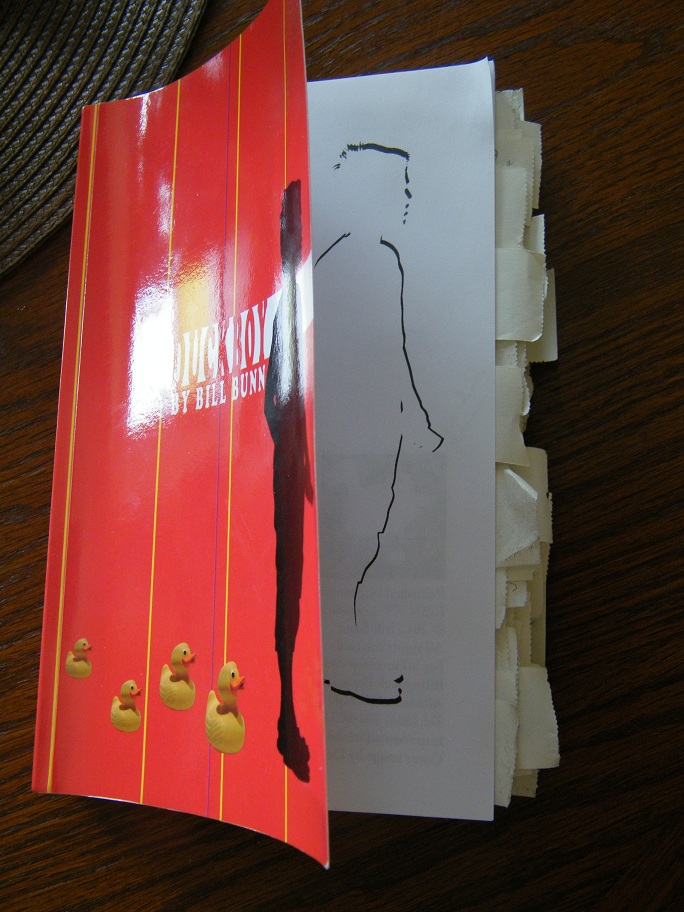
Anyhow, in this phase, we go through the book again, looking for things that are wrong, but it’s changed slightly. Yes, grammar and spelling are still high on the list, but we’re looking for bad page breaks, widows and orphans, layout and typesetting problems. It’s a comprehensive review, end to end, top to bottom. It’s different, too, because instead of working with the electronic file, directly, we’re now working with hardcopy.

Now I asked a friend, Diana, to help me. She’s an excellent editor. She’s also a bibliophile and a bookbinder. Did I mention that she also knows Latin? She’s kind of god-like in this way. She went through the story, too. And she marked up anything she thought we might want to examine. The picture I’ve included here is the result of her work.

From here, it goes to Bitingduck’s copy editor who will do the same thing, I’d guess, and at the end of it all, we’re hoping for perfect copy. Ok. Nearly perfect. As Jay Nadeau, Bitingduck’s Editor-in-chief, says, “a good book is well edited.” And this, my friends, is getting to be one well-edited book.

Posted in advice, fiction, Writing advice, Writing process, Young Adult | Tagged , , , , , , , , , , | Leave a comment

Marketing a book: in with the old & in with the new

Event 008

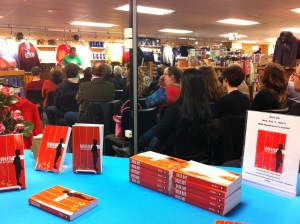
As you probably know, marketing of a book is a very big deal. In some ways, like the  music industry, the marketing can be a bigger deal than the work itself. It’s also the most difficult for most authors. I mean, how many writers write a novel because it would allow them to market?

But it’s a big piece of the process now, bigger than ever before. I’ve heard, now, from several quarters, that small presses also like marketing plans submitted with manuscripts. The marketing plan helps to sell the story to an editor, sometimes. The marketing of these things happens at the same time as the editing. It’s a deeper more comprehensive look at the market place. It happens much earlier, and gets far more attention than ever before.

Oddly enough, marketing affects the writing too. One friend told me he used to give a book 100 pages to “catch” him. He’s a pretty “into it” reader. Now, he said he gives a book 25 pages or so. Earlier in history of the “Duck Boy” manuscript, an editor, who rejected the story, told me I had too many subordinate clauses in some of my sentences, which would put readers off, and affect the marketing of the book. The audience is truly impacting how books are written. If you look at the Harry Potter series, for example, I could easily argue that J.K. Rowling adapted her style to suit an audience that does not give a story as much of a chance as it used to.

Ebooks, Bitingduck’s editor-in-chief Jay Nadeau says, out sold traditional book last year for the first time. Ebooks are marketed differently than traditional books. In the age of the ebook, I’ve been told that people don’t buy just a book any more, they also “buy” the author. The example I’ve heard is one from music. If folks like the music of a singer, but don’t like the singer, they’ll download the music for free. If they like the music, and the singer, they’ll buy the music online. Apparently, this is similar to marketing a book.

In my use of social media, for example, I’ve never populated it with “real” information. I didn’t use pictures. I checked it once in a million minutes or so. I didn’t bother with some media at all. Guess what? I had to change. I had to add detail, add photos, add the stories. Did it make me feel comfortable? No. Is it what’s necessary? Yes.

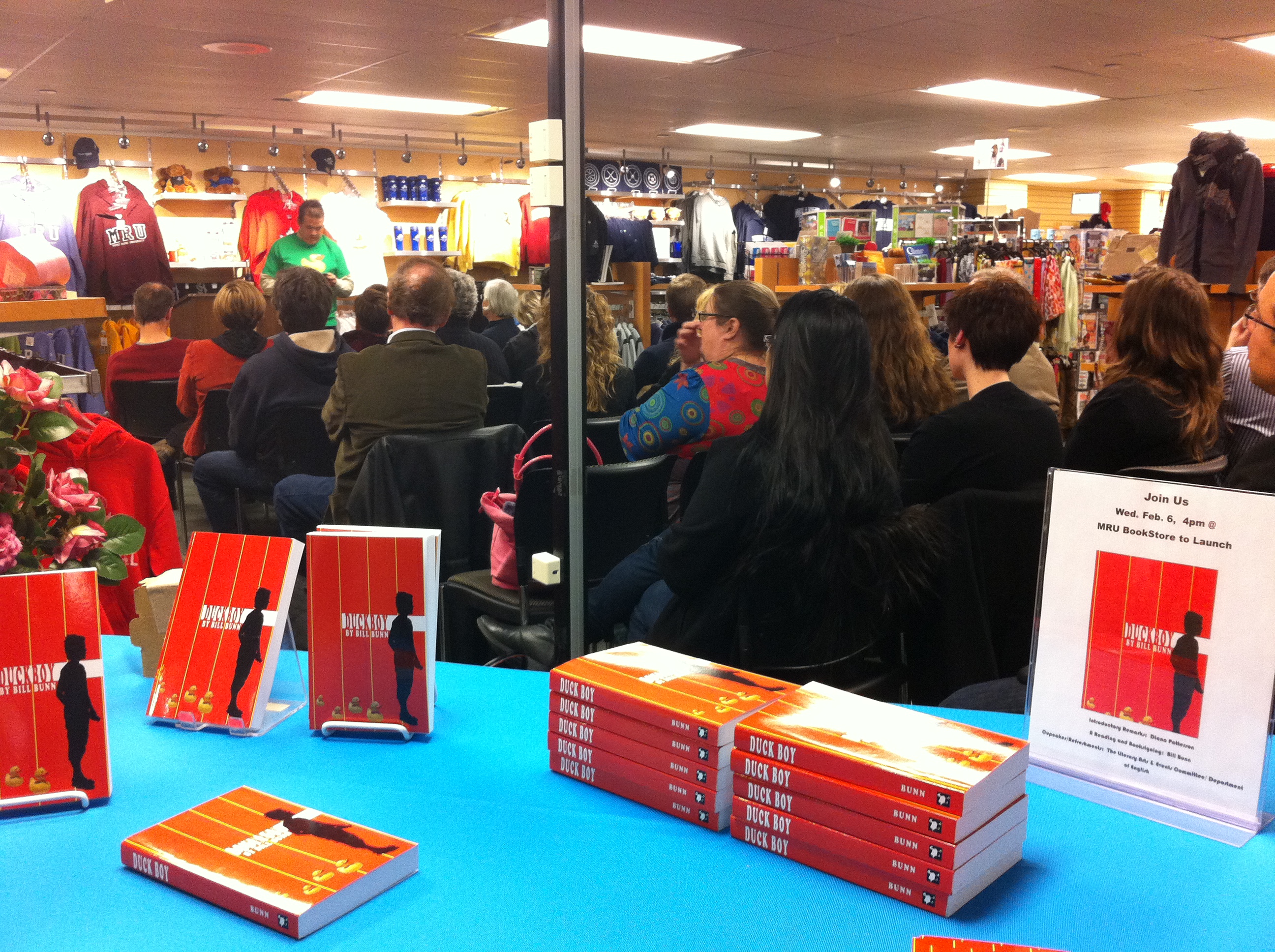
It’s different now than it used to be. In the old days, books get published, and book reps circulate to the bookstores and try to get them to buy the book and give it an appropriate display. Then there are launches, books signings and readings. That’s the traditional stuff.

Because we still have traditional buyers, the traditional stuff stays, too. So there are several bookings that I need to attend to, plan, and execute. I’ve got to rock it, old school. So that’s what I’ve begun to do. I’ve begun to plan the launch and distribution and that sort of thing.

Here’s what marketing looks like now: It’s all the new stuff. Plus, all the old stuff. Sounds like we’re going to be very busy.

Posted in advice, fiction, non-fiction, Writing advice, Writing process, Young Adult | Tagged , , , , , , , , , , | 1 Comment

No writer is an island. Not even a writer on an island.

104004A.TIF

A few words on the importance of the editing process. OK. There was a time when I thought I was so right that editing would have been offensive. But I was a moron for thinking this way. Even the best minds of our world need help to sharpen their thinking. I think this is the biggest reason the publishing process will continue to exist, and probably the best reason why self-publishing will always be a tougher route.

I have a friend who’s a musician. He’s just put out his own album. He sent out the invites to the launch. And links to his songs, which I can download for a small fee. But, um, I don’t know how to say this nicely, the album is not very good. I’ll buy it, because he’s my friend, but I wouldn’t buy it because I want to listen to it. He’s a fine singer, so the problem’s not talent. The problem is editing, I think. He needed someone to help him see problems and fix issues in his work.

Sometimes success ruins someone and they become too ‘big’ to be edited. I’m thinking of George Lucas here. When he allowed others to help create the Star Wars series, they were better movies, from my perspective, than when Lucas got everything he wanted, how and when he wanted it.

The editing process, as it draws to a close, has been excellent. I’ve had at least four people covering my back. My work is not literary or anything, but they are just making sure I won’t produce anything embarrassing. Just so you know, I have embarrassed myself. It’s awful. There are a few things I’ve written and published that I hope no one ever reads again, ever.

I remember this guy in High School, who in a drunken stupor, decided to paint “Grad ‘81” on the side of the school, which most people in our school would have thought was cool at that time. Instead, he painted “Grade ’81.” His exploits dropped from cool to fool instantly. I think most students would still remember him that way today.

One other note. Even though I’ve written a fair number of things, I still have an alarming capacity to suck. No matter how good you get at whatever it is you do, the possibility still loiters in the background ready to make its presence known. And for this reason alone, you want people to help with the work of sorting out a text.

As one of the people helping me sort out “Duck Boy” said to me this week: “I’ll make sure you aren’t embarrassed.” And that’s what I need. I need help because as a writer I still “sin.” I miss potential, I mis-write the text, and I can still write prose that makes it look like I haven’t finished grade six. This much I know is true: no writer is an island, not even a writer on an island.

Posted in advice, fiction, non-fiction, Writing advice, Writing process, Young Adult | Tagged , , , , , , , , , , , | Leave a comment

Editing the book: getting it “righter”

Let me spend a few words on describing what happened once Bitingduck accepted my manuscript. Editor-in-chief, Jay Nadeau, once the contract was signed, asked me to work on some initial revisions. Now, instead of just one set of eyes on the text, I had several. I didn’t feel so alone in the process. A team of us were working together to make the story the best it could be. It’s a happy place, let me tell you.

I went through the two sets of comments she sent, and found that they had read carefully and their suggestions improved the story. I had missed a couple of dramatic opportunities, places where it was possible to include more action to illustrate character more clearly. There were some inconsistencies in character, places where characters were acting in ways they shouldn’t have been.  There were places where characters set down a fork, and it disappears from the table, or run into a wall that shouldn’t be there. Then the run-of-the-mill surface errors. So I set to work.

As I said in an earlier post, I’ve learned to accept criticism, mostly because it’s either that or quit. Plus, I’ve got a lot of learning to do as a writer, even though I’m not so young any more. Good suggestions are a shortcut to some excellent learning. Often, too, I have to grow as a writer just to understand suggestions, let alone make the changes. The process I’ve been through with Bitingduck has been delightfully instructive. I can’t ask for more.

Anyhow, how did I know these were good criticisms? My standard for a fix is that I should be able to “feel the difference.” In other words, the story should be improved in some kind of tangible way when I rework it. It should feel better, more authentic, more substantial. I really don’t know how to describe this feeling, but it’s palpable. Somehow the story becomes “righter,” if you’ll pardon my lack of grammar. So when I went through the proposed changes, I found that the story did feel “righter,” “tighter,” and “brighter” (hey, I’m a poet and I didn’t even realize it.). The changes worked. And I felt confident that the story was on a better track as a result of the interaction. We’re nearing the end of process, I think. As my daughter would have said when she was younger, “it feeled good.”

Posted in advice, fiction, non-fiction, Writing process, Young Adult | Tagged , , , , , , , , | Leave a comment

Patting the pocket (Floating the duck, part III)

Three ducks

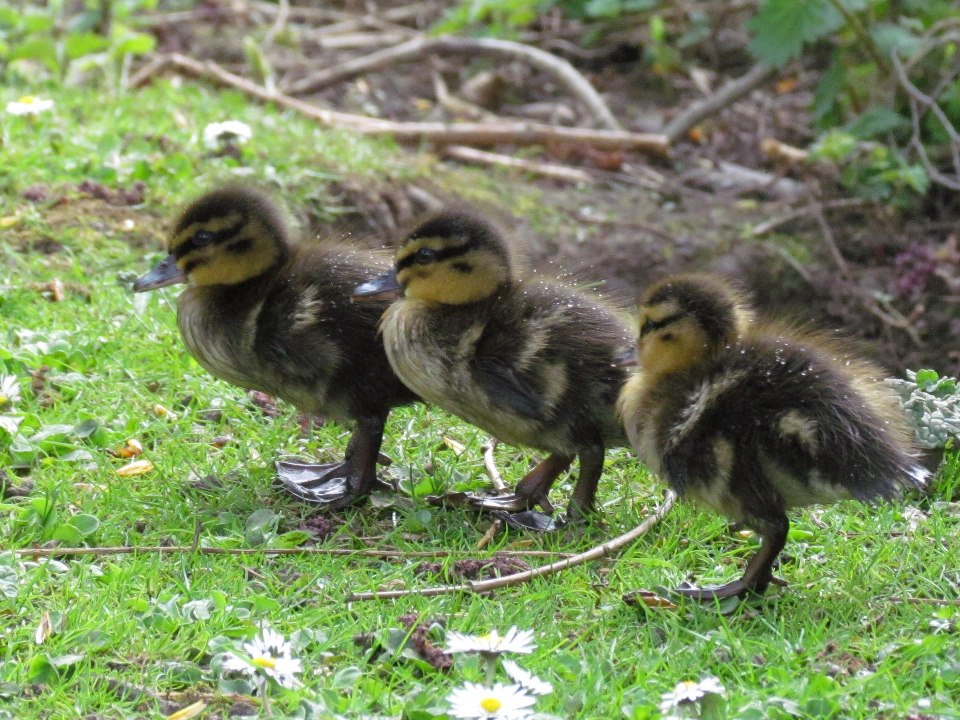
(Photo borrowed from “Duck of the Day“)

Last spring, I was surfing newpages.com, looking under “publishers” and what should meet my eyes than this crazy call for submissions by an American company, Bitingduck Press. I enjoyed the cheeky call and the request for ducks in the manuscript (MS).

Did I happen to mention that my MS included significant references to ducks? I think the publishing call had been up for 6 days when I encountered it. I compiled my cheeky reply to the cheeky call and sent in my first 35 pages. To my delight, I received a request for the full manuscript, probably 4 days after I submitted it. A few days after that, I received the good news that they were interested in publishing it.

Just a note, I have been picking up the emotional pieces after rejections for a long time now. So even when I get fantastic news, I don’t allow myself to believe it. That way, if things don’t work out, I won’t be psychically crushed and needing hospitalization any time something doesn’t work out. So in the back of my mind I was expecting it not to go any further. Then, Editor-in-chief, Jay Nadeau, told me a contract was on the way, and I thought, probably not. To my amazement, the contract showed up and I signed it, but it had a 30 day escape clause for the publisher. I thought, they’ll back out before that clause expires. The 30 days came and went. It’s kinda pathetic, eh. That’s how my mind works. These are the kinds of mental games I’ve played to keep the root beer under the ice-cream, so to speak.

Then came the cover art. OK. Something about the cover overwhelmed me, and made the whole project real. Blown away. Yup. The full force of what had been happening caught me in the chops, right around this time. Now we’ve been back-and-forthing as we move towards publishing this story. I think I can finally allow myself believe.

The first step was beginning to tell people about it. I’ve learned not to tell people about when I submit or what I’m hoping to achieve. Simple reason: don’t want to go back and have to explain to them what happened. So when Jay sent me a large number of postcards with the cover art and the book’s explanation, I began to hand it out. And now, I’m in full scale publicity mode. Arranging launches and publicity stuff. November 1, that’s the day we’ve set for the release. And I can’t wait.

It’s a remarkable process. It’s remarkable because it’s been so long and mentally tricky. And the length and difficulty it created has made this moment all the sweeter. It’s still hard to believe some days.

My friend Ken says he walks around with the newly published book in his pocket, and he just pats it as it sits there. He doesn’t pull it out and show it to anyone. It’s just there in his pocket.  I’m not sure, but I might try the same thing.

Posted in fiction, Writing process, Young Adult | Tagged , , , , , , , | Leave a comment

Rejection slips, God’s rude angels (Floating the duck, part II)

duck bottom

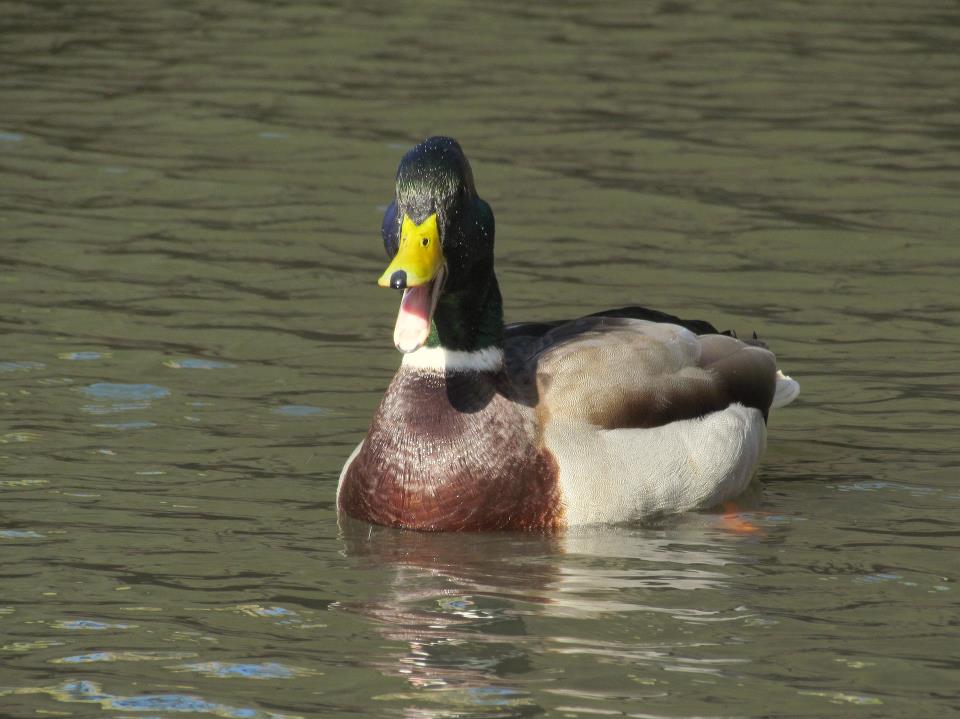
(Photo borrowed from “Duck of the Day“)

But by this time, I had met a novelist, and he offered to read the first 35 pages of my story for free. He also explained how important those first 35 pages were. He suggested I read the opening 35 pages of my favorite authors to see what they do. So I did. He gave me a few suggestions.

“Begin at your startling point, not your starting point.” I’ve heard him say this so many times, I would say he sounded like a broken record, except no one would understand that metaphor any more. So I reworked my beginning. I took a little of most people’s advice and integrated it into my story.

The next spring, when I sent out the first 35 pages. I got a nice, personal rejection. The note was encouraging, generally, and pointed out a few problems I had made that had put them off. I fixed those and sent it out the next year. I got another personal rejection. As my friend, novelist Ken Rivard, would say, keep on sending it; it’ll get published. His view is that “writing is 99 percent perspiration and one percent inspiration.”

Though he is a friend, I deeply suspected him of being a liar on that last point. I often thought he was giving me some glib advice that didn’t really work. I wondered if he was unwilling to tell me the truth: stop writing and play computer games instead. Though I suspected his advice was fraudulent, I kept sending it out each spring.

The last five or six years I usually got a response where the publisher would ask to see the whole manuscript. I would send them the whole manuscript, and then they’d reject it with a fairly detailed critique. Usually the comments were extremely helpful, and helped me to slowly improve dimensions of my writing each time. Of course, there were always comments that I didn’t understand, or didn’t seem relevant.

The last rejection I got, last spring, was one from a very sharp editor in Ontario. The managing editor read the first 35 pages, and requested the whole manuscript. I sent it off and editor sent me back the first 35 pages marked up with her comments. She rejected the manuscript. Her advice I found hard to take because she wasn’t kind in her delivery. So I couldn’t deal with the comments right up front. I let them sit for several months and then, just before sending it out this Spring, I read them again. Sharp and jagged, her words were, but in them, a wealth of good writing advice. So, I swallowed my pride, and made the changes. Then I began to shop for a place to send my manuscript. Though rude and sometimes uneven, rejections were paving the way for success. These horrible attacks on my person and project were teaching me to write!

Posted in advice, fiction, Writing advice, Writing process, Young Adult | Tagged , , , , , , , , , | Leave a comment

Death of an agent (Floating the duck, part I)

Floating duck

(Photo borrowed from “Duck of the Day“)

The submission process for Duck Boy began 16 years ago. I began to submit the story to publishers every spring. Spring seemed to be the season when some publishers take new material. I didn’t do very well. I got the photocopied responses. So I made my wife read the story. She’s actually a great critic, and she gave me a few pointers to consider, which I did. I also forced a few of my friends to read it. They gave me some tips. And I rewrote the story.

I sent the story out and got rejected again, standard photocopied-form rejection notes. These are the toughest rejections to take, I think. There’s nothing to learn from them. They basically say “You suck. Please go away.”

The next spring, when I sent it out, I got a photocopied rejection again. This time I had an editor’s note on the bottom that said something like “Best of luck publishing elsewhere.” This actual handwriting served as a huge encouragement to me, for some weird reason. Someone had cared enough to wish me well.

I then got the address of an agent and sent her the manuscript, thinking I had just hit easy street. And man she was a tough old bird: drank, smoked, and cussed like a sailor. She liked the story, though she hacked it to bits and made me rewrite it to her specifications, which I did. She had another round of changes for me, which I made. And then she died. True story. She smoked most of her life, which lead to a horrible round of cancer, which killed her near the end of 2003. End of my publishing plan, phase one. Time for plan B.

Posted in advice, fiction, Writing advice, Writing process, Young Adult | Tagged , , , , , , , , , , , , , | Leave a comment