Don’t be too ambitious……

Learned a lesson again, yesterday. I’m in the midst of a first edit of an upcoming novel, tentatively titled Coup de Grace. Work stuff is closing in, so I realized I’ve got to floor it or the editing won’t get done for a while. So, instead of my normal 10 page a day goal, I thought I’d try for 100.

Here’s the problem with lofty goals like this one. Many times they turn around and kick me in the crotch, as my goal did yesterday. If I’d been half smart, I’d have realized that it was far too much for one day’s work.

After several hours of work, I’d only been able to finish 35 pages. Which is still pretty good. But my stupid goal made me feel like I’d been lounging around, eating bonbons. Even though I got a lot done, I felt like a jerk for failing to meet my target.

When I set a goal I know I can accomplish, and I meet it. I feel empowered, energized, like I can do it again. Like the whole task is manageable. When I set my goal too high, I feel like a failure, like the entire task is too much, in general. Not good. It makes going back to editing that much more difficult.

Plus, I ruined a perfectly good day. I spent much of the day close to anger, grumpy, and unwilling to take a decent coffee break or enjoy a conversation. My bad.

More importantly, I dented the editing process. My obsession with accomplishment meant I wanted to skip over issues, and skim as I read in order to “get things done.” Editing is a process that requires time and thought. A “need for speed” undermines the entire effort.

Today, I’m going back to my 10 page target. If I get 10 or 200 pages done, it’s still the target I need to use. It’s funny how much of the writing endeavour is a head game. A huge part of success, for me, means keeping expectations in line.

Posted in fiction, Writing advice, Writing process, Young Adult | Tagged , , , , , , , , , , , , , , | Leave a comment

The editing process begins for “Coup de Grace.”

The editing process begins for my next YA novel. Bitingduck Press Editor-in-chief, Jay Nadeau, just sent me her comments after a first read through of my next book, scheduled to be released in Spring 2015. The story is tentatively titled “Coup de Grace.”

I’ve aimed my sights higher. My sincere hope is that I’m a better story teller in this novel than in “Duck Boy.” Of course, there’s no objective way of knowing whether that’s the case. Linda, my first critic, read the story before I sent it to Bitingduck, and she felt it was much stronger as a first draft. I must rely on her judgement.

I’ve been working through Jay’s fixes and comments as I go. I’m also spending quite a bit of time renovating in general. I’ve been working and reworking a few sentences, and adding precise details. improving verb choice, all that sort of thing. I’m also reading it aloud to myself which reveals problems easily.

I tend to repeat myself, which means my writing sometimes uses too many words, so I’m working hard at making things as lean as possible. Not one more word than I need, not one word less.

So, if you follow the twitter feed, I’ll be posting my editing process. Most days I aim at straightening out 10 pages or so. The manuscript is 300 pages at the moment, so that means I’ve got a month or so before it’ll be done.

I’ll be doing 10 pages today, for example, between cutting the grass, doing a bunch of administration, and keeping up with social media. I’ll keep you posted as I go through the process. Wish me luck.

Posted in advice, fiction, Writing advice, Writing process, Young Adult | Tagged , , , , , , , , , , , , , , , , , | Leave a comment

Bitingduck Press is planning to release another of my YA novels!

It’s a lovely bit of news for any writer. My novel has been accepted! Bitingduck Press has accepted my YA novel, Coup de Grace, Spring 2015.

For those of you who follow twitter and other accounts, you’ll know I was working on a book this Winter/Spring. The publisher had taken a look at a few ideas I had, and picked an idea they liked. I set to work putting the story together.

I attempted a new approach. A friend of mine, Randy, told me that he’s a thorough plotter, that the text is actually the very last thing he did, like painting a house after it’s built. I spent quite a bit more time plotting the story out, which helped. I wrote most of the story based on the plot, and then forsook the plot entirely and tuned the story up. It may have worked. I’m not sure.

The publisher seemed to think the story worked reasonably well. This does not mean that we won’t be editing the story or rewriting large bits of it. I haven’t seen the first round of edits yet. But it does mean that the gist of the story, its characters and storyline are useable. It’s a starting point.

This is what signing means: the story’s decent, and the publisher and writer are agreeing to work through the editorial process together. The next year  and a bit will involve the editorial process. The process won’t be easy always, but it will make the story much, much better.

Posted in advice, fiction, Writing advice, Writing process, Young Adult | Tagged , , , , , , , , , , , , , , , , , , , | Leave a comment

Make sure you have a walking stick

Image

Writing is a bit of a psych game, as I’ve learned. With the publication of “Duck Boy” I’ve rollercoastered up and down the hills of opinion, and lots of people who have ideas about how valuable and well-written it is. I feel strongly about the story when I read it. And, for who I am, the story really is written to the limits of my ability. But when I read reviews I am easily swayed. There are quite a few who warned me not to read reviews. There’s a great wisdom in this advice. It’s really like saying, don’t stick your hand in a blender when it’s blending. True, you have a point. Still.

As part of my promotional stuff, I have tried to look up good reviews and send them out as a way of keeping the book in people’s mind. So I do read them, sometimes accidentally, and sometimes on purpose. Sometimes they’re good. And well, who wouldn’t love a good review. Sometimes they’re bad. I start to read, and I can’t stop, the way my eyes sometimes can’t pull away from the gore of a gopher mowed down by a semi. Sometimes, thoughtful people come up to offer tips on things they think could be improved in a book. Like a woman who approached me to let me know that she thought my comma use was wrong. When I get one of these helpful insights or read one of these tough reviews, I implode, and there’s little to prop me up.

But you know what helps? One friend. You need one friend who knows his/her stuff really well, who thinks you’ve done a good job. I have one friend who read the story over who liked it and called it wonderful. And she repeated this to me several times BEFORE the book was published. She’s very smart. She has very high standards, so I can’t fool her. She won’t give me pity points either, or set the bar too low.

My mom is simply impressed with everything I do. Me breathing, according to my mom, is an accomplishment. So when my mom says its good, I can’t believe her. But D is far more difficult to impress. She’s known for her blunt honesty when she doesn’t like something. If she says she likes it, she likes it. So it was, that after the publication, and the silly emotional vicissitudes, I returned to this one person who honestly likes my work, over and over again. She is a walking stick, a crutch.

Now, I’m making this an official part of my writing process, to find one impartial booster to help keep my sanity. I’m going to seek this person out BEFORE publication, to help me cope. I”m also going to recommend others do the same.

Earlier this year, a collection of essays titled Hymns of Home was released. I’ve prepared the same way. I’ve found one person, also a D, but this time a male, who believes that this work has merit. I have my walking stick. I have my moment.

Because after a verbal bashing from a critic, I will return to this moment. And, I lean on it so I don’t fall over.

(The walking stick in the picture is diamond willow from the path behind my house.)

Posted in advice, Essays, fiction, non-fiction, Writing advice, Writing process, Young Adult | Tagged , , , , , , | 2 Comments

Are we becoming a writing culture?

DSCF5167(I included this picture because it makes the post that much more interesting, right? Plus it’s moody and foreboding, don’t you think?)

As we ponder the future of the book and what it means to publish in these changing times, there are all sorts of theories. The most interesting one I’ve read, recently, is Anakana Schofield’s piece in The Guardian. She notes from her publicity work around her novel that she thinks we’ve shifted from a culture of reading to a culture of writing. She laments the loss of the cultured reader.

There’s certainly a case to be made that this shift is happening and it’s worth pondering. Twitter seems like a case in point. It’s like machine gun fire sometimes, those 140 character bursts, from all quarters. In Twitter, it’s plain to see a lot of people have something to say. It’s not very evident whether anyone’s listening or not (The only one who may be listening is the  American Government, says Edward Snowden). Twitter is a perfect example of a writing culture.

One of the reasons we were a book culture has to do with the technology of the press, and the difficulty of making a book. In the beginning (what an auspicious way to begin a sentence) paper and ink was a challenge, as was the making of a book. Given the limited supply of these things, it would make sense that a reading culture developed. But now, technology has made it so anyone can create a book. Fixing words to paper and throwing them around the world is now easy. The harder thing to do is read them, right?

There’s also a crisis in the world of the book review. They’re getting very difficult to believe. It seems like every e-book in the world has a host of 5 star reviews that almost always include the words “this was the best book I’ve ever read.” It seems apparent from the book review crisis that no one is reading, or very few read carefully any more. And it’s difficult to tell careful readers from those who blanket the internet with 5-star, two-thumbs up reviews.

It sure seems like we may be in the middle of a shift. It’s difficult to say, too, whether this is a temporary condition, or the new world order. Regardless, it certainly is an interesting topic for our consideration.

I’d love to hear what you think, which is to say I’ll read your comments.

Posted in Essays, fiction, non-fiction, Writing advice, Writing process, Young Adult | Tagged , , , , , , , , | Leave a comment

Report, mid book tour

I’ve now been in the Los Angeles area for a few days and am getting the hang of the book tour thing. It’s been extremely pleasant. Days are spent wandering around hanging out at cafes, with patches of good discussion with hosts, drinking coffee. Evenings are event slots, which are typically two hours or so. The venues have been great. There is nothing like the brick and mortar bookstore. It’s old school. Like vinyl records.

I was nervous about the events themselves, because I’ve not had much experience with the “reading.” I’ve had nothing but lovely supportive audiences. I’m sure that will have to change at some point. Everyone gets heckled eventually, right? However, it’s been a marvelous experience, thus far.

This afternoon, the BDP Press folks are getting together and we’re experimenting with some new promo ideas. Then we’ll be off to the event this evening. Jay Nadeau, editor in chief, also mentioned that there’s a few chapters of audio book complete, so we might be able to listen to some of that, too.

Yesterday, we had a chat with Ramzi Hajj, the founder of Storiad (a website for writers of various types). Chats with lots of different writers, editors, booksellers, and smart people. All conspiring to find the road ahead for writers, books, book marketing and selling. If my mind was abubble about books before I got here, it’s a roiling boil now.

My only sadness is I forgot my camera. So there are no images for me to post. You’ll have to take my word for it all, it’s been rich. Here’s to another full day!

Posted in Essays, fiction, non-fiction, Writing advice, Writing process, Young Adult | Tagged , , , , , , , , , , , | Leave a comment

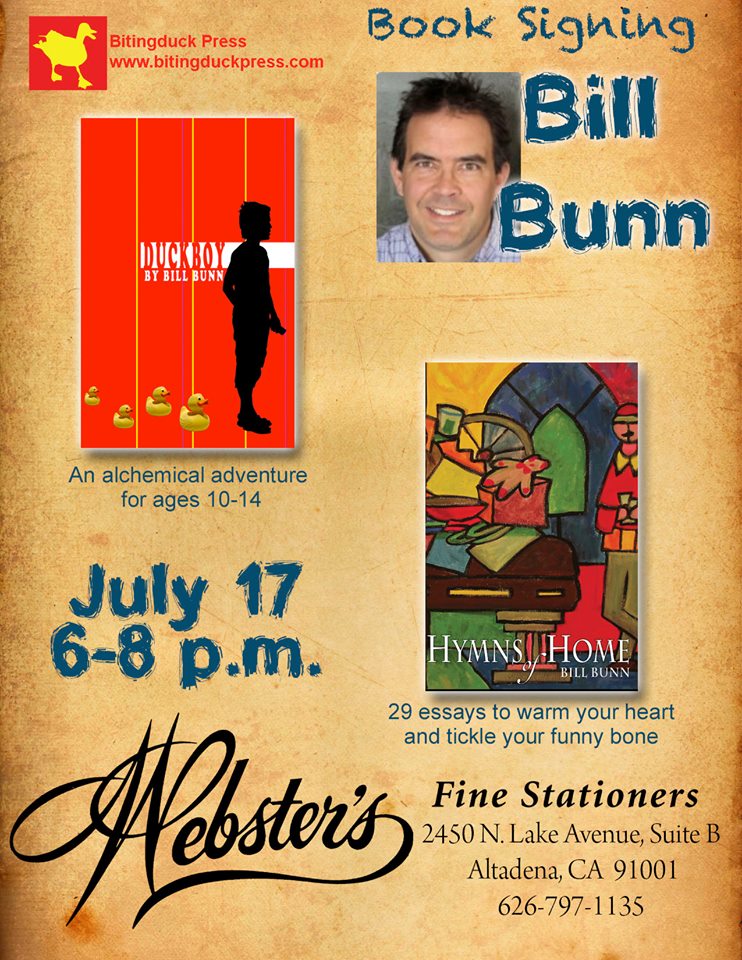
Heading to California for some readings (and to hang with Bitingduck Press folk)!

Here’s some of the skinny!

Poster

Posted in Uncategorized | Leave a comment

Committing to paper: draft 2

Ms

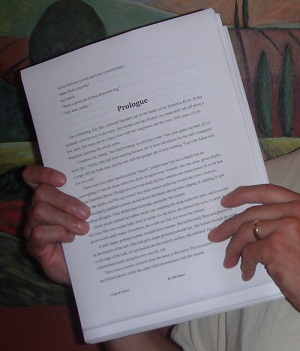
After 6 months of steady writing and editing, I finished. I wrote the original draft, then edited the entire thing again. That was the original plan, and I did it. It’s time to commit to paper.

Large principle of editing: Move from big concerns to small ones, and from the author to a growing group of readers. So, I do all the first edits. I’m reading for plot elements and right people doing and saying right things, ish. I can leave a few details to be sorted out later. Then, it’s a move to some of the larger sentence-to-sentence issues, which can be done on screen, at first.

The print out is an important part of the edit. Paper somehow allows me to pay attention to fine detail. According to some research, smaller marks in the text, like punctuation and that sort of thing, are difficult to read on screen. Paper’s critical. By the time I’m done, I’ll have gone through it four times.

Of course, I still have to be open to change the story. Once I’ve done this process, I need to involve others who will then proceed to tell me where I’ve made impossible leaps, and left gigantic gaps. In other words, when I involve others the whole process goes back to plot issues again, as it must, and the edit begins again.

It’s critical process, and one that takes a decent story idea and pounds it into the best shape possible.  So I’m in the early stages of a potentially long process. But the story did make it to paper.

Posted in advice, fiction, Writing advice, Writing process, Young Adult | Tagged , , , , , , , , , , , , , , , , | Leave a comment

Character accents: the deliberation

Mouth (2)

My first draft is complete. Plot’s in place, the right characters in the right spots, with the right objects. My visit to the story site provided lots of detail for the descriptive texture. I’m currently braiding contextual detail into the draft.

I ran into a couple of lovely accents while I was on my trip. A couple of humdingers. I’m thinking of cutting through another edit and splicing an accent into one character’s lines. But it’s not a clear cut thing.

Accents can be handled in different ways. I, for example, can simply tell the reader that the character has an accent and throw a few examples into the dialogue from time to time. Or, I can engage in that bravest form of character development and phonetically spell it out in each and every line of a character’s dialogue. The accent I heard on my trip is a thick brogue that comes out of native speakers in a musical mumble.

But, accents tend to add to story muddle. It is possible to put too much texture into a story. The texture can eclipse the story and interfere with the reader’s experience. Done well, accents become a seamless part of character. Done badly, they hamper the read.

I am writing for boys, from 10 to 13. From what I understand, these boys won’t appreciate too much texture. So, I’m tempted to trim back the accent. It’s too bad because the accent is rich.

But I’d like some advice on this one, so if you have thoughts, please let me know….

Posted in advice, fiction, Uncategorized, Writing advice, Writing process, Young Adult | Tagged , , , , , , , , , , , | 2 Comments

Imagination shakes hands with reality.

I’ve written a complete first draft of a story set in a small town. I used my imagination, and a healthy dose of Google map to figure out the logistics. And then I decided to visit. What a weird trip.

It’s kind of like having many email conversations with a person, and then meeting that person. Or speaking with someone on a phone several times before meeting him or her. It’s just weird.

It was weird, first of all, because when I arrived here, I knew where many things were already. Why? I’d been studying the map for 6 months. Though I didn’t actually know the place, I had this premonitory sixth sense about where things were. I knew instantly that the taxi driver took me the long way into town (Just after he asked me if I’ve ever been there before, which I hadn’t). I muddled through a strange landscape to find things I’d written about and felt like I knew. Strange, to know a place you’ve never visited.

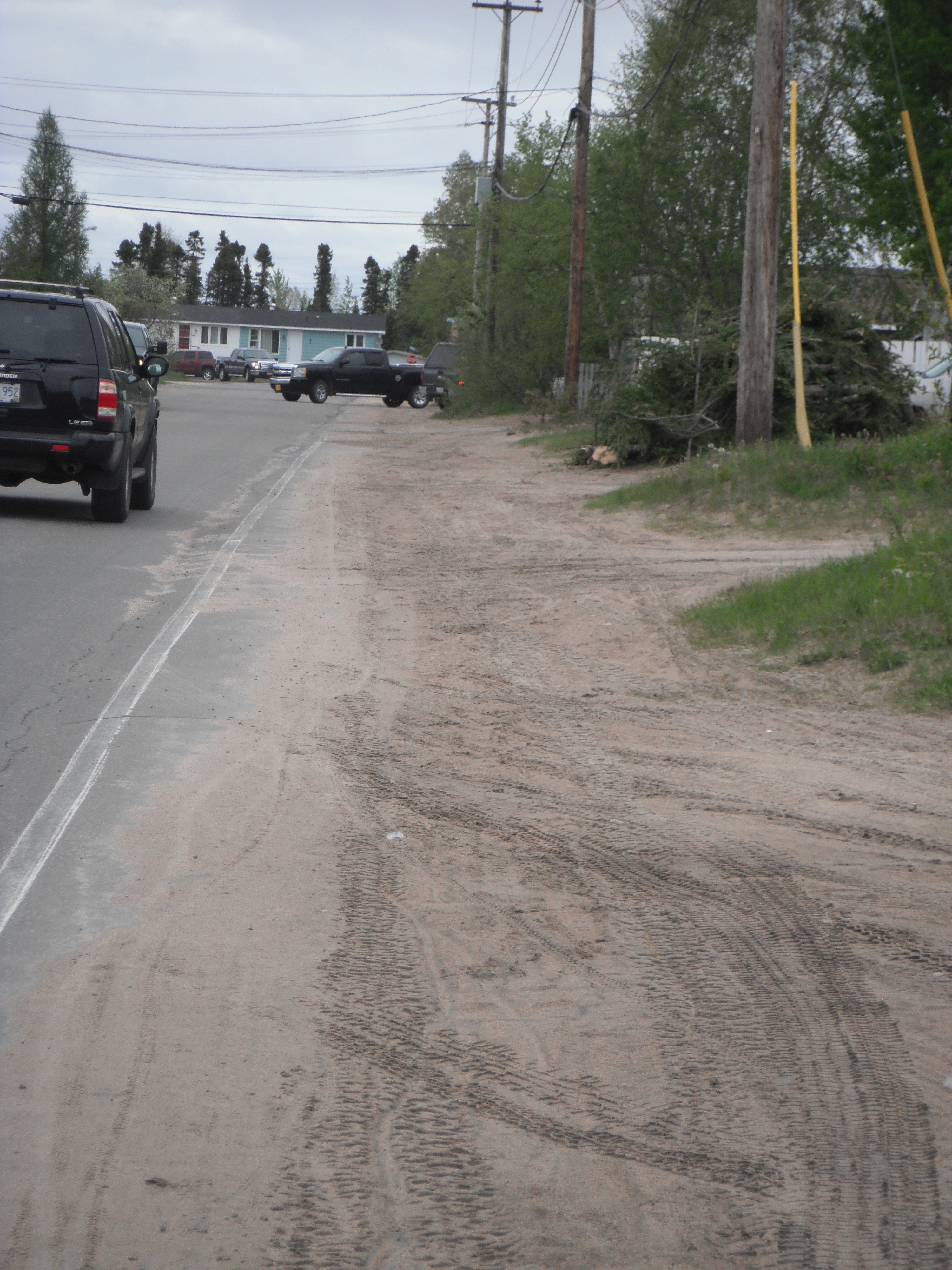
DSCF4916For example, this is a picture looking North on 10th Street. I know before I hit that house on the end, I’ve got to turn left, and then two streets later, turn right. It’s a bit strange to know this in advance. But there you go.

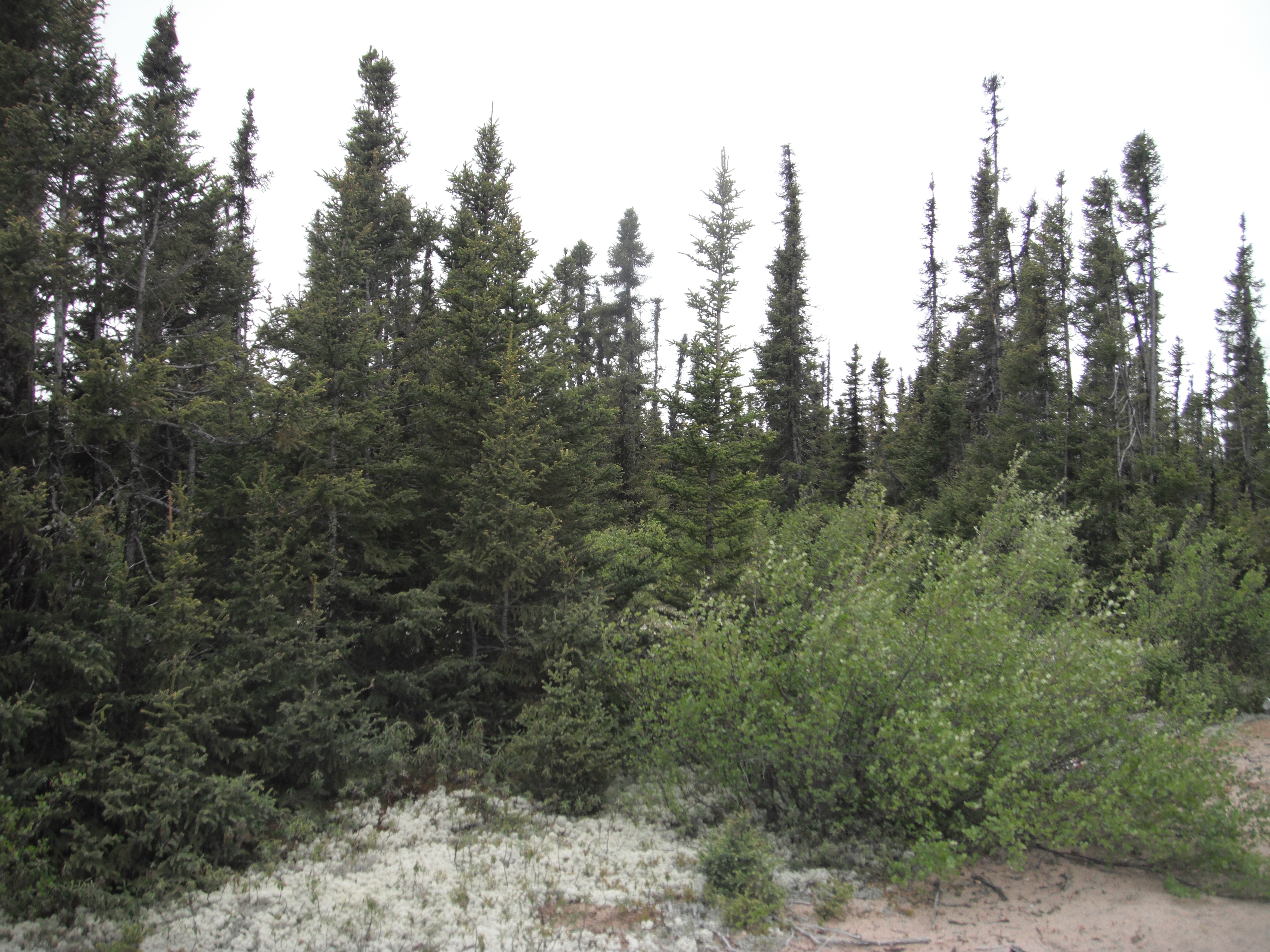
Second, it was wrong in many respects. Some of the things I’d imagined don’t exist, or don’t exist the way I expected they might. Like the spruce trees. I imagined a full on forest-style spruce, based on my forest experiences. But, what did I find?

DSCF4924The spruce trees are scrawny. It is a sub-arctic climate here, and that North wind must be frigid. The north sides of many of the trees on the forest edge were bare of branches. The trees are much shorter than I imagined, too.  I’ll have to adjust the story a little, after seeing this.

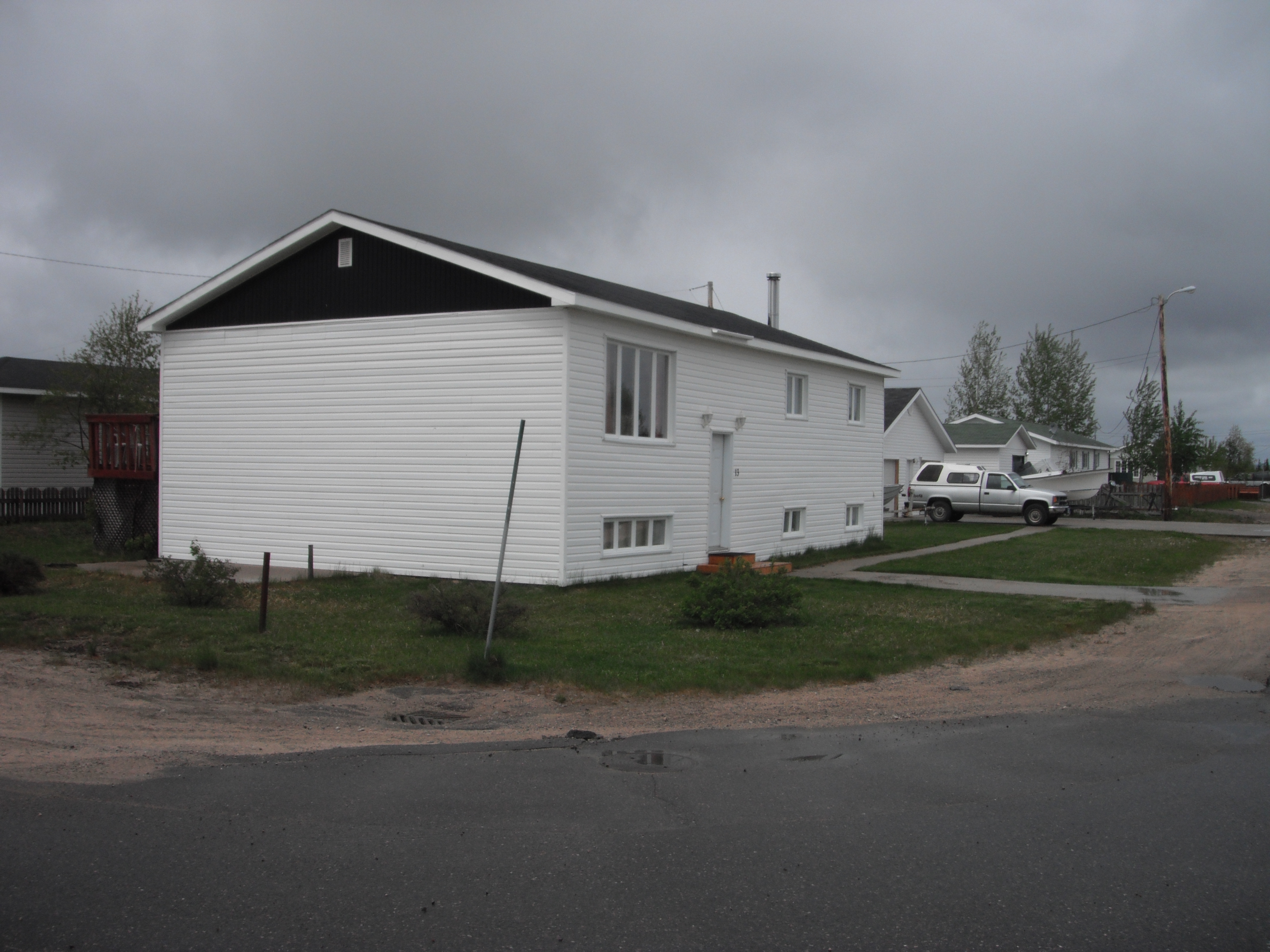
Then, some odd things add to my imaginations. Like the streets where my main protagonist and antagonist live. I walked both places looking for the houses they lived in. I walked Winters Crescent, for example, for the house my protagonist lives in at the beginning of the story. I came around the corner, to the place where I’d imagined he’d lived and I find this house:

DSCF4963

This house is perfect. It’s perfect. I hadn’t fleshed out the exact look of it mentally, but when I saw this place, it finished my imagination completely. Odd fact: It’s in the exact location where I had planned it to be. Google doesn’t have a street view here so there’s no way to know what would have been there ahead of time. Second odd fact: the house number is 13.

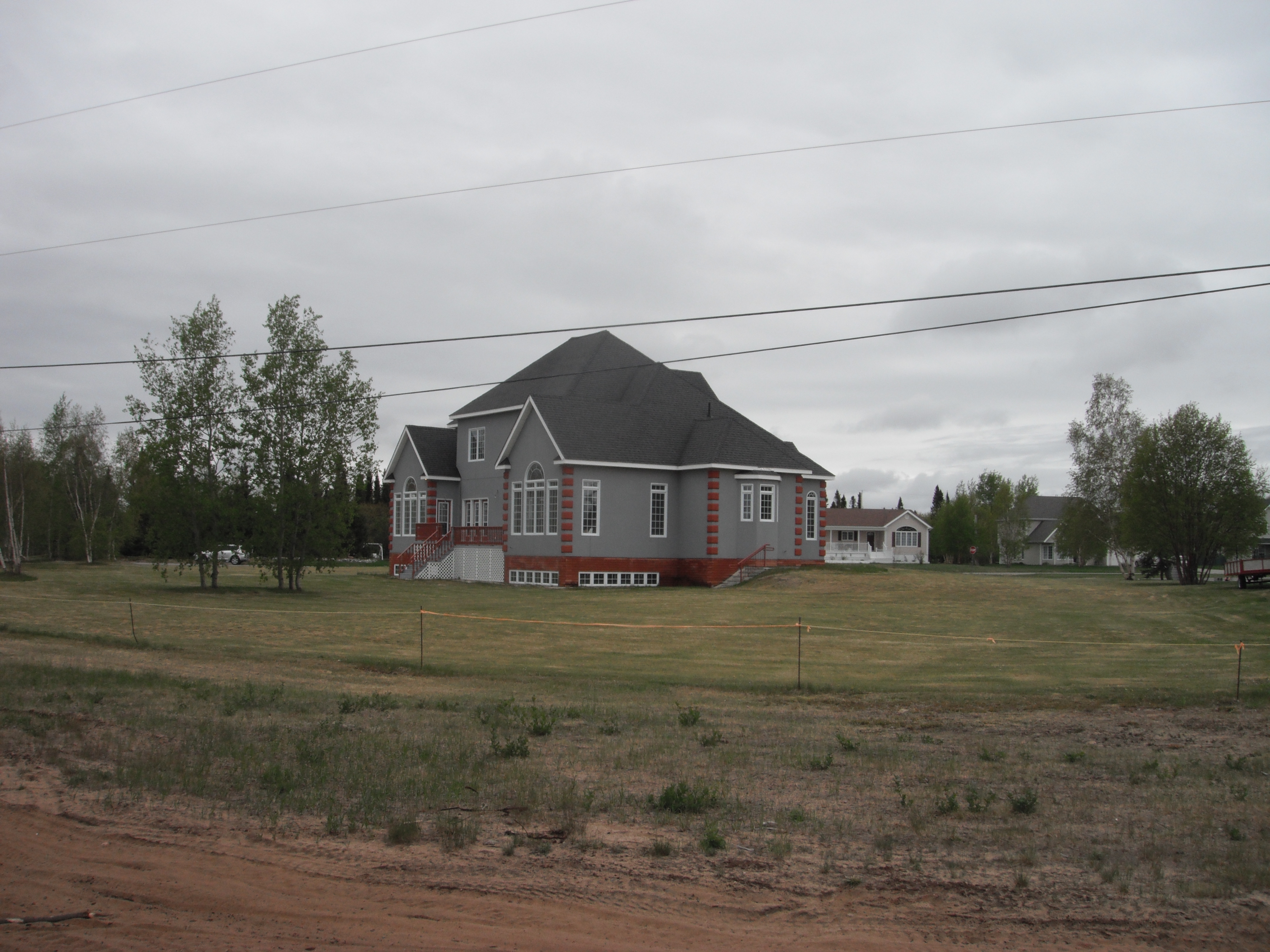
I had a similar experience for the house of my main antagonist. Picked the location randomly. Here’s where she lives:

DSCF4934It’s the right house in the right place. Nothing else to be said about it. But odd that it should be where it ought to have been, don’t you think?

I’ve seen a good deal that will help finish the story well. It’s been worth the visit. It’s not at all like I imagined, yet somehow some of its better, and I arrived as a stranger, with that odd feeling that I’d been there before, if only virtually. This is my experience when imagination meets reality.

Posted in fiction, Uncategorized, Writing advice, Writing process, Young Adult | Tagged , , , , , , , , , , , | 1 Comment